
The decision to outsource is often initially triggered by a desire to reduce overhead, yet focusing solely on the bottom line frequently masks the true strategic value of a global partnership. For COOs and operations leaders, the real objective is to build a scalable engine that enhances leadership bandwidth and drives long-term organizational health. By shifting the perspective from simple expense reduction to high-level operational efficiency, companies can unlock a competitive advantage that far outweighs the initial savings on payroll.
Defining Strategic Outsourcing for Modern Operations
To lead a growing company effectively, leadership must view outsourcing as an extension of their core team rather than a detached service provider. This section explores how a sophisticated partnership model allows COOs to stop managing tasks and start leading initiatives. By focusing on quality, integration, and output, businesses move beyond the “gig economy” mindset and into a sustainable growth phase.
The Evolution of the Global Workforce
Modern service-based companies are no longer looking for simple data entry; they are looking for specialized talent that can integrate into their existing workflows. When a company reaches a certain maturity level, the “cost savings” metric becomes a baseline rather than a goal. The focus shifts toward how many hours of executive time are reclaimed and how much faster the company can pivot in response to market changes. This shift requires a robust framework for measurement that accounts for the nuances of human capital and process optimization.
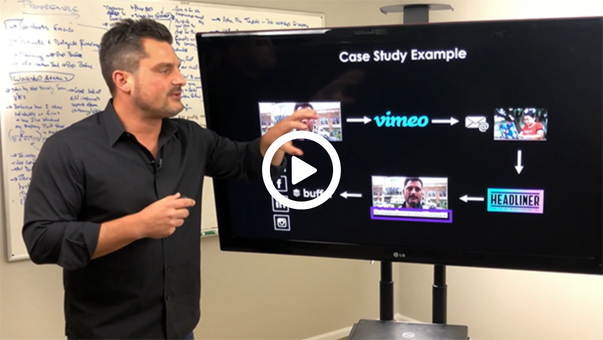
As Brad Stevens, founder of Outsource Access, notes regarding the discovery of these opportunities:
“We analyze all of it and then predict where’s the biggest value. There’s 100 ideas with that one thing, right?”
This approach highlights that the true value of an outsourcing partner lies in their ability to identify high-impact areas that internal teams may have overlooked. Instead of just doing the work cheaper, the goal is to do the right work better, ensuring that every outsourced hour contributes directly to the company’s broader strategic vision.
Quality of Output Over Quantity of Hours
In a high-growth environment, the volume of work completed is often less important than the quality and accuracy of that work. Measuring success through the lens of quality ensures that the outsourced team is actually reducing the burden on internal management rather than creating more work through constant revisions. High-quality output allows for “set and forget” workflows where leadership can trust that standard operating procedures are being followed with precision.
When quality is high, the ripple effect is felt throughout the organization. There is less friction in hand-offs between departments, and client satisfaction remains stable or improves. By establishing clear quality benchmarks as a primary KPI, COOs can validate that their outsourcing model is supporting the brand’s reputation. This level of reliability is what enables a business to scale without the typical growing pains associated with a stretched internal staff.
Reclaiming Executive Bandwidth and Cognitive Capacity
For many leaders, learning how to expand bandwidth becomes a critical factor in sustaining growth and maintaining focus on strategic priorities. The most significant constraint on a small to mid-sized business is rarely capital, but rather the limited time and energy of its senior leadership. This section examines how to measure success by the amount of “high-value” work leadership can perform after offloading tactical burdens. Reclaiming this bandwidth is essential for making the critical decisions that lead to sustainable market expansion.
Maximizing the Unique Value of Leadership
Every founder and COO has a “zone of genius”—the specific tasks and strategic thinking that only they can provide to the organization. When leadership is bogged down in administrative or repetitive operational tasks, the company’s growth trajectory plateaus because its most expensive assets are performing low-value work. Brad Stevens emphasizes this by asking:
“What is it that you’re doing that isn’t the best use of your time or that you know is not the unique thing you bring to the organization?”
Measuring success means tracking the migration of leadership time from “the weeds” to “the clouds.” Success in this category is often measured by the increase in time spent on business development, strategic partnerships, and product innovation. If a COO finds themselves spending 20 percent more of their week on long-term planning after six months of outsourcing, the ROI is far higher than any salary arbitrage could provide. This KPI focuses on the “opportunity cost” of leadership—what could you be building if you weren’t managing your own calendar or basic reporting?
Managing the Cognitive Load of Innovation
In today’s rapidly changing business environment, the sheer number of tools, platforms, and methodologies can be overwhelming for a leadership team. As Brad Stevens points out:
“The challenge is the cognitive capacity of small to medium business owners to be able to evaluate all the tools and resources that are out there.”
A successful outsourcing partner doesn’t just provide a person; they provide the capacity to research, vet, and implement new technologies and processes that the owner simply doesn’t have the mental space to handle. When an outsourcing partner takes over the “discovery” and “implementation” phases of new projects, they free up the executive’s brainpower for higher-level decision-making. Measuring success here involves looking at the speed at which new initiatives are launched.
Enhancing Internal Morale and Employee Retention
Outsourcing is often feared by internal staff, but a well-executed model actually serves as a protective barrier against burnout for the core team. This section discusses how to measure the impact of outsourcing on the existing workforce’s happiness and productivity. By removing the “grunt work” from high-salaried internal employees, companies can foster a more engaged and creative work environment.
Combating Burnout Through Strategic Support
Internal employees often become overwhelmed when a company scales faster than it hires, leading to a culture of constant firefighting. Brad Stevens warns of the dangers of ignoring these signs:
“It tells you people may be burning out because they tell you a bunch of things that aren’t worth their time—they’re at risk for leaving.”
Using an outsourcing partner to absorb the repetitive, time-consuming tasks that drain internal talent is a vital strategy for retention. Measuring success in this area involves tracking employee engagement scores and turnover rates. If the internal team reports feeling more supported and less buried in “busy work,” the outsourcing initiative is working. A successful partnership allows your best people to focus on the work they were actually hired to do, which increases their job satisfaction.
Validating the Voice of the Internal Team
A strategic outsourcing model creates a feedback loop where internal employees identify the bottlenecks that hinder their own performance. Brad Stevens highlights that a core benefit of this process:
“As we talked about, employees feel valued—that their voice is being valued.”
When leadership asks employees what tasks they would like to offload and then actually provides the support to do so, it builds an immense amount of trust and loyalty within the organization. The KPI here is the qualitative and quantitative feedback from the internal team regarding their work-life balance. When employees see that outsourcing is being used to help them, not replace them, they become advocates for the system. They begin to look for more ways to optimize their workflows because they know the company is invested in their professional growth and mental well-being.
Removing Growth Constraints and Identifying New Opportunities
Scalability is often hindered by invisible barriers related to time, money, and knowledge that an outsourcing partner is uniquely positioned to dismantle. This section explores how to measure the “agility” gained through an external partnership. By identifying and solving for these constraints, companies can move from a state of reactive maintenance to proactive growth. Many organizations discover that a major constraint on growth is simply a lack of available bandwidth to execute important initiatives.
Breaking Through Operational Bottlenecks
Many businesses remain stagnant not because they lack a good product, but because they lack the operational bandwidth to execute on new ideas. In many growing companies, a hidden bottleneck in operations can prevent teams from acting on valuable opportunities.
Brad Stevens suggests asking:
“What do you think we should be doing as a business that we’re not doing due to time, money, and knowledge constraints?”
A successful outsourcing relationship provides the “legs” to run with those ideas that have been sitting on the shelf for months or years. The metric for success here is the “Project Completion Rate” for non-core but high-value initiatives. This might include building a more robust lead generation database, updating the company’s SOP library, or performing deep market research. If the company is finally ticking off items from its “wish list,” it is a clear sign that the outsourcing model is providing the necessary leverage to overcome previous limitations. Addressing an operation bottleneck quickly can significantly improve execution speed and organizational agility. Understanding how to expand bandwidth through outsourcing enables businesses to remove an operation bottleneck before it limits growth.
Predicting and Capturing Long-Term Value
Outsourcing should not be a static arrangement; it should evolve as the business grows. Brad Stevens emphasizes the importance of looking ahead:
“We want [clients] to see an opportunity to add more that we can continue adding value.”
A partnership is succeeding when it proactively suggests new ways to streamline operations or identifies emerging needs before they become crises. Success can be measured by the “Innovation Contribution” of the outsourcing partner—how many process improvements or new opportunities did they bring to the table this quarter? When the partner starts functioning as a “think tank” for operational efficiency, they become an invaluable asset. This transition from being a cost center to a value generator is the hallmark of a high-tier outsourcing model. This proactive support helps organizations overcome a persistent constraint on growth by providing additional capacity and expertise.
Optimizing the Total Cost of Growth
While we move beyond simple cost savings, the financial efficiency of the model remains a critical pillar of any COO’s evaluation. This section addresses how to measure the Total Cost of Growth, which includes recruiting, training, and infrastructure costs compared to the outsourced model. This holistic view provides a much more accurate picture of the partnership’s financial impact.
Lowering the Barrier to Scaling Operations
Hiring internal staff involves significant hidden costs, including benefits, office space, hardware, and the extensive time spent on the recruitment process. When measuring the success of an outsourcing partnership, leaders should look at the “Speed to Hire” and the “Fully Burdened Cost” of scaling a department. An outsourcing model allows for rapid expansion without the long-term liabilities and administrative overhead of traditional hiring. By comparing the cost of scaling with an outsourced team versus an internal one, COOs can quantify the “capital efficiency” of their operations. This allows the business to reinvest the saved capital into marketing, R&D, or other growth drivers.
Measuring the ROI of Strategic Flexibility
In a volatile economy, the ability to scale up or down without the trauma of layoffs or the delay of hiring is a massive strategic advantage. Successful outsourcing provides a “flexible labor” model that allows the business to respond to seasonal demands or sudden market shifts with ease. This level of strategic flexibility allows businesses to adapt resources quickly while maintaining operational stability. This agility has a direct impact on the company’s resilience and long-term viability. The metric for success here is “Operational Elasticity”—how quickly can the company increase its output in response to a new contract or market opportunity? This flexibility ensures that the company is never “too big” for a downturn or “too small” for a major opportunity. Greater strategic flexibility ensures organizations can capitalize on opportunities without creating unnecessary operational strain.
Driving Success with Outsource Access
Measuring the success of an outsourcing partnership requires a sophisticated approach that looks deep into the operational health of the organization. While the bottom line matters, the true KPIs of a successful partnership are found in reclaimed executive bandwidth, improved internal morale, and the ability to shatter growth constraints. At Outsource Access, we provide more than just virtual assistants; we provide a strategic operational framework designed to help small and mid-sized companies scale with precision.
Our model is built on the philosophy that human capital should be a lever for growth, not a source of friction. By integrating highly trained professionals into your workflows, we help you identify the opportunities that drive the biggest value for your business. If you are ready to move beyond simple cost savings and start measuring true operational success, book a call with our team today to learn how we can support your journey toward sustainable, scalable growth.